


Draw to Dig - EPO Eats All
4.317.00 Reviews
App Specs
- Version
- 0.1.8
- Updated On
- License
- Free
- Downloads
- 1,000,000+
- Developer
- GOOD TO SEE YOU
- Categories
- Strategy
- Platform
- Android
Screenshots
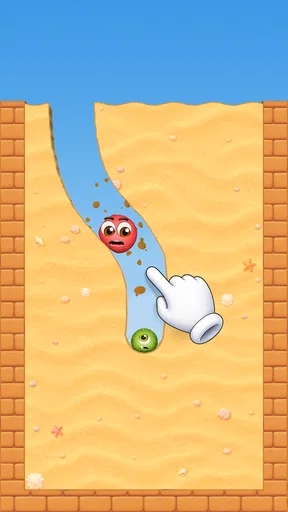
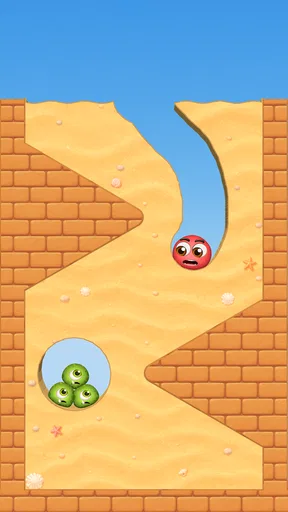
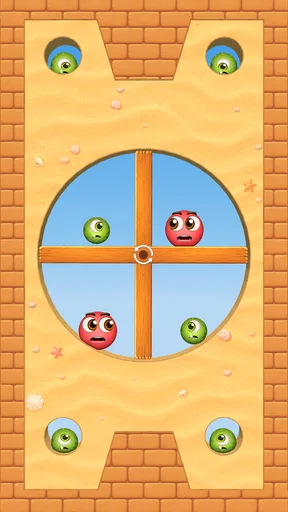
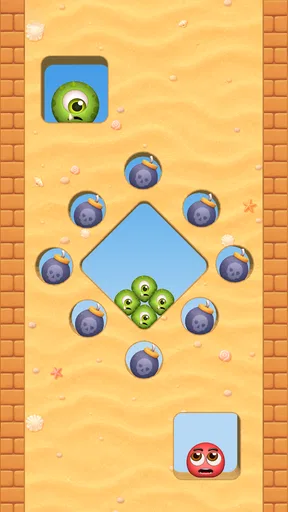
 Analysis by AppCompare
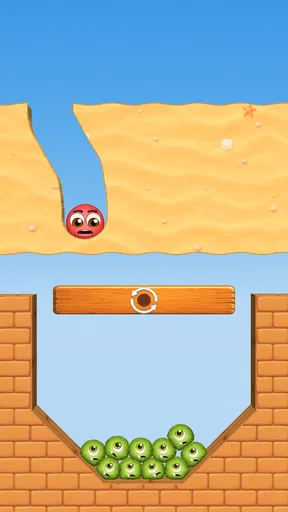
I like puzzle games that ask me to make one clear decision and then let me see the consequences immediately. Draw to Dig - EPO Eats All is built around that simple loop: I sketch a route through sand so EPO can reach food, while bacteria and germs give each puzzle its purpose. It is easy to understand, but the interesting part is learning to draw less, plan around the terrain, and avoid turning a clean solution into a messy one.
Finding a reliable way through the sand
I find this section most useful when I stop treating every failed route as a reason to redraw the whole screen. I look for one detail I can test on the next attempt, such as a different starting point or a simpler line, so the result tells me something rather than merely consuming another try. That measured approach leads naturally into the small habits that make each puzzle easier to handle.
Start with the goal, then draw
My first instinct in a draw-to-dig game is to trace the most direct line from the character to the target. That is a useful starting point here, but it is not always the best plan. Before dragging a finger across the screen, I look at where EPO needs to go and consider how the sand might shift when a path is cut. The drawing is not just a line on a map; it is the action that changes the route.
A dependable routine is to pause briefly, identify the destination, and make one deliberate cut rather than scribbling several possible paths. If the first attempt fails, I try to work out why: perhaps the opening was aimed poorly, or perhaps the route itself needs a different shape. That small moment of diagnosis makes retries feel useful instead of random.
The game’s basic idea is approachable enough for a short break, and its strategy label makes sense in a compact, hands-on way. I am not managing a long campaign or issuing a string of commands. I am weighing a local problem, committing to a drawing, and watching whether that decision gets EPO where it needs to go. The pleasure comes from seeing a simple gesture solve a small spatial challenge.
Use each retry as information
When a route does not work, I recommend changing one thing at a time. A completely different drawing may succeed, but it will not tell you which part of the first attempt was the problem. Adjusting the angle or starting point while keeping the overall plan gives a clearer comparison. This is especially helpful when a level looks straightforward but the sand behaves less conveniently than expected.
I also avoid drawing right up against every visible edge. A path that appears precise can be harder to execute with a fingertip than a slightly broader, simpler route. The practical trade-off is clear: a careful line may save space, while a forgiving line is easier to draw accurately. When I am playing quickly, I favor the second option and accept that the neatest-looking solution is not always the most reliable one.
Worth Reading Before You Choose

Flipboard Shows What News Apps Must Do Beyond the Feed

Switching to Android Auto Means Rethinking Your Driving Routine

Google Calendar Makes a Crowded Week Easier to Manage

Ludo King Makes the Most of the Minutes Between Plans

Baby Panda World Brings Quick Play to Modern Phones, but Its Game Library Feels Busy

ESPN’s Live Game View Makes Following Close Games Easier
The aim of feeding EPO while dealing with bacteria and germs gives the puzzles a little more personality than a plain “reach the exit” exercise. Still, I would not approach each screen as though it hides a complicated tactical system. The fun is in reading the specific layout and using a sensible path, not in hunting for elaborate combinations that the game has not established.
Build a repeatable rhythm
Once I have the basic feel, I settle into a repeatable rhythm: inspect, draw once, watch the result, then revise only if necessary. That habit is more effective than making a long, impatient stroke as soon as a level appears. It also keeps the game relaxed. I can play a puzzle, put the phone down, and come back later without needing to remember a chain of earlier decisions.
For a realistic everyday use, this is the sort of game I would open while waiting for a drink or taking a brief break between tasks. I would play one or two puzzles, not expect a deep session, and stop when I felt myself drawing carelessly. The short-action format suits those gaps because the central choice is visible on screen and does not require a large commitment of attention.
Small habits that make the puzzles smoother
The smoother sessions come from controlling the parts I can: keeping the screen visible, choosing a line before I touch it, and resisting the urge to improvise halfway through. Those habits are especially handy when I’m playing one-handed or squeezing in a quick break, because they reduce avoidable mistakes without relying on any special feature. They also make it easier to judge whether the game’s focused style suits me.
Check your controls and device before blaming the puzzle
The most useful “setting” to check is often the one in your hand: how you are holding the phone and where your finger lands. A thumb can obscure the route near the point of contact, especially when the screen is small or the drawing crosses a busy area. I get a better view by using a comfortable grip and starting the gesture where I can see the line develop. If touch input feels awkward, switching to a steadier hand is a more sensible first move than assuming the puzzle requires a perfect swipe.
I would also take a moment to check the device’s general display and touch settings if lines regularly land somewhere other than intended. That is ordinary troubleshooting, not a special trick built into the game. Keeping the screen clean and avoiding a rushed, sliding grip can make a noticeable difference in a drawing-based puzzle, where the player’s gesture is the main tool.
Prefer a clear route over decorative drawing
Experienced play here is less about drawing elaborate shapes and more about removing unnecessary motion. A short, clear route is easier to judge and repeat than a winding line created on the fly. I try to decide where the cut should begin and where it should end before touching the screen. That reduces the chance that I will drift midway through the gesture or cover the part of the layout I still need to inspect.
There is a useful trade-off between precision and speed. If I am stuck, slowing down to make a controlled adjustment is worthwhile. If the path is obvious, spending extra time polishing the drawing adds little. That distinction keeps the game from feeling like a test of finger dexterity alone: planning matters, but the best plan is often the one I can execute cleanly.
Make retries deliberate, not automatic
A quick retry can be tempting, but repeating the same movement at a higher speed rarely improves the result. I treat each attempt as a small experiment. Was the route too direct? Did I begin drawing in a spot that made the gesture hard to control? Would a broader opening be more forgiving? This gives every replay a purpose and helps me learn the game’s feel without pretending there is a hidden shortcut.
For younger players, the simple drawing interaction is approachable, although I would still consider the age guidance: the game is rated Everyone 10+. It can also suit an adult who wants something light rather than a demanding strategy campaign. The important distinction is expectation: this is a compact puzzle diversion, not a substitute for a game built around long-term planning, competitive depth, or extensive progression.
What the audience and price suggest
The game is free to install, with in-app purchases listed at $4.99 per item. I would go in expecting the core experience to be available without an upfront purchase, while keeping in mind that optional spending can exist. The listing’s average rating is 4.4 from around 2,800 ratings, and it has passed a million installs. Those figures suggest that the straightforward premise has found an audience, but they do not tell me whether every player will enjoy its particular pace.
GOOD TO SEE YOU is the developer, and the current release is version 0.1.8, with Android 6.0 as the minimum operating-system requirement. The game was released on August 4, 2026. I mention those details because they help with a practical decision: check that your device meets the requirement before installing, and remember that a version number is a snapshot of the app rather than a promise about how it will feel on every handset.
Where this style works—and where it runs out of room
A narrowly focused drawing puzzle can be satisfying precisely because it asks for one readable decision at a time, but that same focus sets a ceiling on what I should expect. I would choose it for tactile route planning, not for a broad campaign or a deep set of strategic systems. With that distinction in mind, it becomes easier to see where this style fits—and where another kind of game would serve me better.
How it compares with other strategy games
Compared with turn-based strategy games, this is much more immediate. There are no extended rounds to plan around in the core premise; I focus on one screen and one drawn route. Compared with physics-puzzle games, the appeal is similarly tactile, but the goal here is specifically tied to digging a way for EPO and navigating the germs-and-bacteria theme. That gives the game a clear identity, even if it does not offer the broad strategic variety of a larger management or tactics game.
That narrow focus is both its strength and its limitation. It is easy to pick up and does not ask me to memorize a complicated set of rules. On the other hand, players who want many interacting systems, substantial character development, or a long strategic arc should choose another kind of game. I would also steer away anyone who dislikes drawing with a finger; the central interaction is the point, so there is no way to enjoy the premise while avoiding it.
Know when a simple solution is enough
One trap in this kind of puzzle is assuming that a more intricate route must be more clever. I find it better to start with the simplest plausible cut and add complexity only when the result shows that the basic idea is insufficient. This is a concrete way to save time: it avoids overplanning a level that may only need a clean opening, while still leaving room to reconsider when EPO does not reach the intended food.
Another helpful habit is to separate planning from execution. I look over the screen first, then commit to a line without stopping halfway to invent a new plan. Mid-stroke improvisation tends to make the route less controlled. If I change my mind, I would rather reset my thinking and make a fresh attempt than try to rescue a confused drawing. That approach is particularly useful on a phone, where a thumb can hide the path as it is being made.
The limits become more noticeable when I want variety for its own sake. A single core interaction can be satisfying in short bursts, but it may not hold my attention as well as a strategy game with several ways to approach each challenge. I would not buy into it expecting a deep sandbox. I would choose it for quick, tactile problem-solving and judge it on whether I enjoy reading a layout and making a clean cut.
Who I would recommend it to
I would recommend Draw to Dig - EPO Eats All to someone who likes compact puzzles, enjoys drawing routes on a touchscreen, and wants a game that can fit into spare minutes. It is also a reasonable pick for a family looking for a simple premise, provided the age rating suits the player. The free entry point makes it easy to try the central idea before deciding whether it belongs on your regular home screen.
I would skip it if I needed a rich strategy experience, disliked touch-drawing, or wanted a game that rewards long sessions with layers of planning. If those are your priorities, a turn-based tactics game or a broader physics puzzler is likely a better match. This one is at its best when I accept its modest scope and enjoy the satisfaction of making one well-considered route work.
My verdict after settling into its rhythm
What I appreciate most is how clearly the game turns a small action into the whole puzzle. I do not need to learn a sprawling rulebook: I inspect the sand, plan a route, and see whether my drawing gets EPO closer to a meal while accounting for the germs and bacteria. The strongest way to play is patient but not fussy—use a visible, manageable line, learn from a failed attempt, and resist adding detail just to feel clever.
My honest recommendation is to try it when you want a light strategy puzzle rather than a long-form challenge. Its simple workflow is easy to return to, and deliberate retries give the drawing mechanic more thought than the short description suggests. Just keep expectations grounded: it is a focused dig-and-route game, not a deep tactical system. If that focused loop sounds appealing, this is an easy one to sample; if you want substantial strategic layers, your time is better spent elsewhere.
Pros
- Simple draw-and-solve gameplay is easy to pick up.
- Short levels work well for quick play sessions.
- Creative solutions let players experiment with different lines.
- The playful premise gives the puzzles a lighthearted feel.
- A good fit for players who enjoy casual physics puzzles.
Cons
- Some puzzles may feel repetitive after extended play.
- Later levels can rely on trial and error.
- Drawing controls may be imprecise on smaller screens.
- Ads may interrupt the flow of play.
- The challenge may be too light for experienced puzzle fans.
FAQs for Draw to Dig - EPO Eats All
What is Draw to Dig - EPO Eats All about?
Draw to Dig - EPO Eats All is a casual puzzle game built around drawing paths to guide EPO toward food. Each level asks you to work out how to connect the character and the objective while dealing with the layout and obstacles on screen. The appeal comes from finding a workable route with a simple finger-drawn line, rather than controlling a character through a traditional action game.
How do you play Draw to Dig - EPO Eats All?
The basic idea is to draw a line that helps EPO reach or collect the food shown in a level. Before drawing, look over the scene and consider how your path may interact with its objects and hazards; a direct route may not always be the best solution. The controls are designed for touch screens, making the game easy to try, while later puzzles may call for more careful planning and experimentation.
Is Draw to Dig - EPO Eats All suitable for children?
Its straightforward drawing mechanic and cartoon-style puzzle presentation may make Draw to Dig - EPO Eats All approachable for younger players. However, suitability depends on the child and on the version available in your region. Before handing over a device, check the store listing’s age rating and review its details about ads, in-app purchases, and data practices. Younger children may also benefit from playing with an adult nearby.
Does Draw to Dig - EPO Eats All require an internet connection?
Whether every part of Draw to Dig - EPO Eats All works offline can depend on the current version and how the app handles advertisements or other online features. The core drawing puzzles may appear suited to individual play, but that does not guarantee that all levels or extras are available without a connection. Check the app’s store listing and, if offline access matters to you, test the game in airplane mode after installing it.
Is Draw to Dig - EPO Eats All free, and does it include ads or in-app purchases?
The price, advertising, and purchase options for Draw to Dig - EPO Eats All can vary by platform, region, and release version. Check the Google Play or App Store listing for the latest pricing and the developer’s disclosures before downloading. If the game is free, it may still include advertisements or optional purchases. On a shared device, consider setting purchase approval or parental controls to avoid accidental spending.


